Monday, October 22, 2007
BMW 1 Series Coupe (video)
The new BMW 1 Series Coupé features rear-wheel-drive dynamics and seating for four (2+2). The BMW 135i is powered by BMW’s twin-turbocharged 3.0-liter inline six-cylinder engine, which produces 300 horsepower and direct piezo gasoline injectors, twin low-mass turbochargers and air-to-air intercooling. The car accelerates from 0-62 mph in 5.3 seconds. The engine features on-demand engine coolant pumps that improve fuel economy. Starting in the spring of 2008 in the U.S., the 1 Series Coupe will be available in two versions; the 128i and the 135i, with an M Aerodynamic Kit.

2008 Mitsubishi Endeavor Review
Summary
Though it's a well-rounded package, the 2008 Mitsubishi Endeavor is increasingly lost amidst a growing crowd of very good SUVs.
Pros
Carlike ride and handling, spacious seating front and back, solid build quality, torquey V6 engine, long warranty coverage.
Cons
No available third-row seat, less cargo capacity than competitors, missing a few common features, some mediocre interior materials.
 What's New for 2008
Traction control is now standard on all Endeavors, while two-tone leather upholstery is now standard on the SE trim level, along with contrasting stitching. The rear glass no longer opens independently of the hatch on the LS trim level.
2008 Mitsubishi Endeavor Vehicle Overview
Introduction
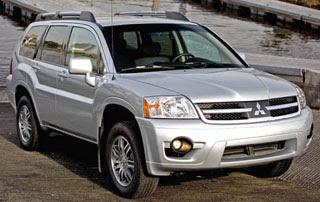
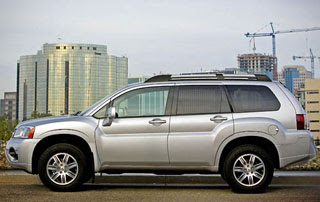
There's more to the 2008 Mitsubishi Endeavor than huge fender flares and exaggerated body bulges. That's saying quite a lot, since this midsize five-passenger crossover SUV is festooned with the type of body adornment that makes you wonder if the folks at the factory accidentally included the prototype's styling excesses on the production model. Yet between the Endeavor's love-it-or-hate-it swollen sides is a vehicle that offers solid driving dynamics, a gutsy V6, a roomy cabin and good build quality.
The 2008 Mitsubishi Endeavor is a dark-horse candidate to be sure, overshadowed by newer and/or better-known five-passenger crossovers like the Ford Edge, Mazda CX-7, Hyundai Santa Fe or even Mitsubishi's own Outlander, which offers almost as much interior space and more high-tech goodies. Also, larger crossovers like the Ford Taurus X and GMC Acadia have room for seven, while besting the Endeavor's meager fuel economy. If its ambitious styling floats your boat, though, and you can live without two extra seats, the 2008 Endeavor is a good choice that provides safe, comfortable and well-built family transportation.
© Source: edmunds
We need your comments below >>
Though it's a well-rounded package, the 2008 Mitsubishi Endeavor is increasingly lost amidst a growing crowd of very good SUVs.
Pros
Carlike ride and handling, spacious seating front and back, solid build quality, torquey V6 engine, long warranty coverage.
Cons
No available third-row seat, less cargo capacity than competitors, missing a few common features, some mediocre interior materials.

 What's New for 2008
Traction control is now standard on all Endeavors, while two-tone leather upholstery is now standard on the SE trim level, along with contrasting stitching. The rear glass no longer opens independently of the hatch on the LS trim level.
2008 Mitsubishi Endeavor Vehicle Overview
Introduction
There's more to the 2008 Mitsubishi Endeavor than huge fender flares and exaggerated body bulges. That's saying quite a lot, since this midsize five-passenger crossover SUV is festooned with the type of body adornment that makes you wonder if the folks at the factory accidentally included the prototype's styling excesses on the production model. Yet between the Endeavor's love-it-or-hate-it swollen sides is a vehicle that offers solid driving dynamics, a gutsy V6, a roomy cabin and good build quality.
The 2008 Mitsubishi Endeavor is a dark-horse candidate to be sure, overshadowed by newer and/or better-known five-passenger crossovers like the Ford Edge, Mazda CX-7, Hyundai Santa Fe or even Mitsubishi's own Outlander, which offers almost as much interior space and more high-tech goodies. Also, larger crossovers like the Ford Taurus X and GMC Acadia have room for seven, while besting the Endeavor's meager fuel economy. If its ambitious styling floats your boat, though, and you can live without two extra seats, the 2008 Endeavor is a good choice that provides safe, comfortable and well-built family transportation.
© Source: edmunds
We need your comments below >>
Honda to begin sales of the all-new Fit in Japan
Honda has announced it will begin sales of the Honda Fit (known as Jazz in Europe) in Japan on Friday, October 26, 2007. The hugely popular small car retains all its best features – class leading economy, cabin space to rival mid-sized saloons, and easy manoeuvrability – yet has been brought bang up-to-date with some subtle design changes, and clever interior space solutions.Two engines will be available on the new car, a 1.5-litre i-VTEC and a super frugal 1.3-litre i-VTEC which delivers maximum output of 100PS. CVT transmission is also available. In the chassis, a longer wheelbase and wider track offer even better stability, manoeuvrability and handling. Honda Fit was first introduced in Japan in June 2001. It is now being produced in six factories in five countries and sold in approximately 115 countries around the world. Cumulatively, sales of Fit and Jazz exceed two million units. A rotating passenger seat is available on the Japanese car which takes full advantage of the Fit’s easy access. The seat has a higher position than previously, has additional foot space and features a specially contoured seat cushion. The seat enables easy loading and unloading of a wheelchair through the rear seats. A new Jazz for the European market will go on sale late in 2008. No details of this car have been announced.
Sunday, October 21, 2007
Newcomers: 2008 Porsche 911 GT2
It's not commonly known, but jet lag is cured by high-speed injections of German autobahn, a volksremedium we discovered long ago, at 180 mph in a Porsche 928 S4.
And it still works. Better than melatonin, mile-high liaisons, or other familiar folk remedies, there's no surer cure for jet lag than redlining a Porsche on an unrestricted autobahn-as we're about to reaffirm in the 2008 911 GT2, the best Porsche ever unleashed on an undeserving everyman. (Don't even think about owning one if you can't handle full opposite lock or payments on an MSRP of $191,700.)
Driving the 530-horsepower two-seater at 180 mph doesn't cure our jet lag as much as expel it violently from the car, but heavy rain means reaching the GT2's top speed of 205 mph is out of the question. Even with double the previous GT2's downforce from the new Le Mans racer-inspired body and rear wing, and excellent grip from the 19-inch Pirellis, the GT2 is too much car for the conditions. We also keep Porsche's spectacularly efficient stability-management systems, suitably modified for the GT2's higher limits, on full alert, leaving it to others to find out what happens when the driver is let loose in the most powerful, fastest, and costliest 911 ever.
 That part of the test is conducted on an unused airport's runways by Walter Rohrl, former rally champ and current Porsche test driver, who, in perilously slippery conditions, dispensed a pure dose of GT2.
"This car was ninety-percent done before I ever drove it," shouts Rohrl over the roar of the biturbo's new titanium exhaust, one of the strategies to lighten up a platform that began life in the same gene pool as the "standard" all-wheel-drive 911 Turbo. "It was that good, but the final 10 percent can be learned only by driving."
And what did he learn?
"This is the best 911 ever," he pronounces, left hand and right foot executing a perfect power slide. "Race car, street car, the best."
Much of Rohrl's opinion, and the GT2's final suspension tuning, was formulated on the Nurburgring's Nordschleife, where he set a time of 7:32, faster than the previous GT2's 7:46, the fastest for any production-series 911 and comparable with the Carrera GT. "It has the power and stability of a good race car, but it drives more easily," he continues, shifting down through the six-speed manual gearbox as quick as a cardshark flashes aces.
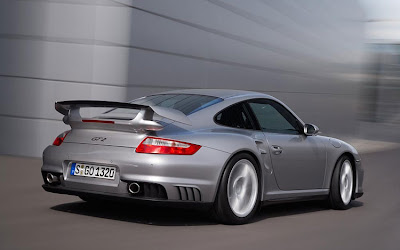 Key to the GT2's fleeter feet is 300 pounds of shed weight via composite front bucket seats, elimination of the rear seats, an aluminum rear-axle subframe, the plastic rear lid and wing, a composite intake manifold and lightweight front aluminum brake hats, which, along with standard ceramic composite brake rotors, means less weight at the nose, a valuable ingredient of the GT2's steering-quick, precise, and the best we've ever felt in a 911.
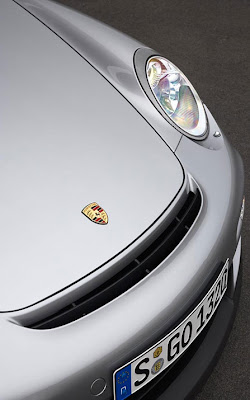
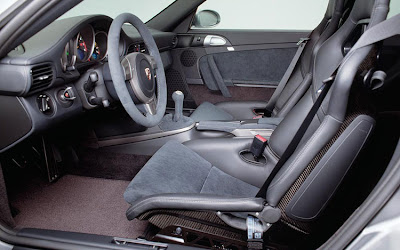
"Turn-in is fantastic," Rohrl yells, his left hand gripping the wheel as lightly as if it were a lover's fingertips. "You always know just how much steering is needed," he says, illustrating the point with a bit of one-handed countersteer through a wet corner.
Though it's not homologated to race in any professional series, the GT2 is racetrack-ready. The chassis sits an inch lower than the 911 Carrera's and can be fine-tuned via adjustable anti-roll bars, spring plates, and wheel camber plates. A partial rollcage and fire system are optional, but not the full cage available in most other parts of the world. Most important to the talented few, the traction controls can be entirely disabled.
Rohrl pushes the proper buttons to do so, and, now using both hands to steer, purposely takes a bone-headed apex to show how easily the car transforms sideways movement into forward momentum. "No understeer," he shouts. "New front kinematics!" Rohrl also endorses the GT2's command of any road surface. "This is not a race car. You can go racing in it and have fun, but you can also drive it from Stuttgart to Berlin and not feel any pain."
It's also a great antidote to a muddled mind, snapping every sense to attention and replacing jet lag's sluggish distortion of time and space with an intensified perception of the here and now. Groovy.
[source: MotorTrend]
Other Excellent articles about Porsche Cars:
+ Edo Porsche 997 Shark Test Drive
+ Faster than getting a coffee at Starbucks: GT2 laps the 'Ring in 7:32
+ New Porsche Cayenne begets new TechArt Magnum
+ Porsche's New Range-Topping 911 Convertible Offers Huge Pace In Every Gear And Sensational Performance
+ Most Powerful Production Porsche
+ 2007 Porsche Targa 4S A Hard-Edged Sports Car
+ GT2 hits the Ring
And it still works. Better than melatonin, mile-high liaisons, or other familiar folk remedies, there's no surer cure for jet lag than redlining a Porsche on an unrestricted autobahn-as we're about to reaffirm in the 2008 911 GT2, the best Porsche ever unleashed on an undeserving everyman. (Don't even think about owning one if you can't handle full opposite lock or payments on an MSRP of $191,700.)
Driving the 530-horsepower two-seater at 180 mph doesn't cure our jet lag as much as expel it violently from the car, but heavy rain means reaching the GT2's top speed of 205 mph is out of the question. Even with double the previous GT2's downforce from the new Le Mans racer-inspired body and rear wing, and excellent grip from the 19-inch Pirellis, the GT2 is too much car for the conditions. We also keep Porsche's spectacularly efficient stability-management systems, suitably modified for the GT2's higher limits, on full alert, leaving it to others to find out what happens when the driver is let loose in the most powerful, fastest, and costliest 911 ever.
 That part of the test is conducted on an unused airport's runways by Walter Rohrl, former rally champ and current Porsche test driver, who, in perilously slippery conditions, dispensed a pure dose of GT2.
"This car was ninety-percent done before I ever drove it," shouts Rohrl over the roar of the biturbo's new titanium exhaust, one of the strategies to lighten up a platform that began life in the same gene pool as the "standard" all-wheel-drive 911 Turbo. "It was that good, but the final 10 percent can be learned only by driving."
And what did he learn?
"This is the best 911 ever," he pronounces, left hand and right foot executing a perfect power slide. "Race car, street car, the best."
Much of Rohrl's opinion, and the GT2's final suspension tuning, was formulated on the Nurburgring's Nordschleife, where he set a time of 7:32, faster than the previous GT2's 7:46, the fastest for any production-series 911 and comparable with the Carrera GT. "It has the power and stability of a good race car, but it drives more easily," he continues, shifting down through the six-speed manual gearbox as quick as a cardshark flashes aces.
 Key to the GT2's fleeter feet is 300 pounds of shed weight via composite front bucket seats, elimination of the rear seats, an aluminum rear-axle subframe, the plastic rear lid and wing, a composite intake manifold and lightweight front aluminum brake hats, which, along with standard ceramic composite brake rotors, means less weight at the nose, a valuable ingredient of the GT2's steering-quick, precise, and the best we've ever felt in a 911.


"Turn-in is fantastic," Rohrl yells, his left hand gripping the wheel as lightly as if it were a lover's fingertips. "You always know just how much steering is needed," he says, illustrating the point with a bit of one-handed countersteer through a wet corner.
Though it's not homologated to race in any professional series, the GT2 is racetrack-ready. The chassis sits an inch lower than the 911 Carrera's and can be fine-tuned via adjustable anti-roll bars, spring plates, and wheel camber plates. A partial rollcage and fire system are optional, but not the full cage available in most other parts of the world. Most important to the talented few, the traction controls can be entirely disabled.
Rohrl pushes the proper buttons to do so, and, now using both hands to steer, purposely takes a bone-headed apex to show how easily the car transforms sideways movement into forward momentum. "No understeer," he shouts. "New front kinematics!" Rohrl also endorses the GT2's command of any road surface. "This is not a race car. You can go racing in it and have fun, but you can also drive it from Stuttgart to Berlin and not feel any pain."
It's also a great antidote to a muddled mind, snapping every sense to attention and replacing jet lag's sluggish distortion of time and space with an intensified perception of the here and now. Groovy.
[source: MotorTrend]
Other Excellent articles about Porsche Cars:
+ Edo Porsche 997 Shark Test Drive
+ Faster than getting a coffee at Starbucks: GT2 laps the 'Ring in 7:32
+ New Porsche Cayenne begets new TechArt Magnum
+ Porsche's New Range-Topping 911 Convertible Offers Huge Pace In Every Gear And Sensational Performance
+ Most Powerful Production Porsche
+ 2007 Porsche Targa 4S A Hard-Edged Sports Car
+ GT2 hits the Ring
2008 Mitsubishi Endeavor Review
Summary
Though it's a well-rounded package, the 2008 Mitsubishi Endeavor is increasingly lost amidst a growing crowd of very good SUVs.
Pros
Carlike ride and handling, spacious seating front and back, solid build quality, torquey V6 engine, long warranty coverage.
Cons
No available third-row seat, less cargo capacity than competitors, missing a few common features, some mediocre interior materials.
What's New for 2008
Traction control is now standard on all Endeavors, while two-tone leather upholstery is now standard on the SE trim level, along with contrasting stitching. The rear glass no longer opens independently of the hatch on the LS trim level.
2008 Mitsubishi Endeavor Vehicle Overview
Introduction
There's more to the 2008 Mitsubishi Endeavor than huge fender flares and exaggerated body bulges. That's saying quite a lot, since this midsize five-passenger crossover SUV is festooned with the type of body adornment that makes you wonder if the folks at the factory accidentally included the prototype's styling excesses on the production model. Yet between the Endeavor's love-it-or-hate-it swollen sides is a vehicle that offers solid driving dynamics, a gutsy V6, a roomy cabin and good build quality.
The 2008 Mitsubishi Endeavor is a dark-horse candidate to be sure, overshadowed by newer and/or better-known five-passenger crossovers like the Ford Edge, Mazda CX-7, Hyundai Santa Fe or even Mitsubishi's own Outlander, which offers almost as much interior space and more high-tech goodies. Also, larger crossovers like the Ford Taurus X and GMC Acadia have room for seven, while besting the Endeavor's meager fuel economy. If its ambitious styling floats your boat, though, and you can live without two extra seats, the 2008 Endeavor is a good choice that provides safe, comfortable and well-built family transportation.
© Source: edmunds
We need your comments below >>
Though it's a well-rounded package, the 2008 Mitsubishi Endeavor is increasingly lost amidst a growing crowd of very good SUVs.
Pros
Carlike ride and handling, spacious seating front and back, solid build quality, torquey V6 engine, long warranty coverage.
Cons
No available third-row seat, less cargo capacity than competitors, missing a few common features, some mediocre interior materials.
What's New for 2008Traction control is now standard on all Endeavors, while two-tone leather upholstery is now standard on the SE trim level, along with contrasting stitching. The rear glass no longer opens independently of the hatch on the LS trim level.
2008 Mitsubishi Endeavor Vehicle Overview
Introduction
There's more to the 2008 Mitsubishi Endeavor than huge fender flares and exaggerated body bulges. That's saying quite a lot, since this midsize five-passenger crossover SUV is festooned with the type of body adornment that makes you wonder if the folks at the factory accidentally included the prototype's styling excesses on the production model. Yet between the Endeavor's love-it-or-hate-it swollen sides is a vehicle that offers solid driving dynamics, a gutsy V6, a roomy cabin and good build quality.
The 2008 Mitsubishi Endeavor is a dark-horse candidate to be sure, overshadowed by newer and/or better-known five-passenger crossovers like the Ford Edge, Mazda CX-7, Hyundai Santa Fe or even Mitsubishi's own Outlander, which offers almost as much interior space and more high-tech goodies. Also, larger crossovers like the Ford Taurus X and GMC Acadia have room for seven, while besting the Endeavor's meager fuel economy. If its ambitious styling floats your boat, though, and you can live without two extra seats, the 2008 Endeavor is a good choice that provides safe, comfortable and well-built family transportation.
© Source: edmunds
We need your comments below >>
Saturday, October 20, 2007
First Drive: 2008 Aston Martin DBS.Be James Bond at 191 mph
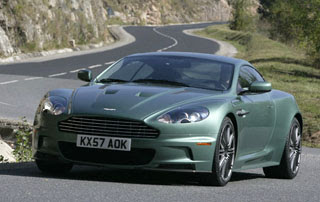
Low, sleek and yet self-consciously aggressive, the 2008 Aston Martin DBS is the ultimate expression of the contemporary Aston Martin.
The 2008 Aston Martin DBS is the car that Aston CEO Dr. Ulrich Bez describes as "thunder and lightning." Aston Martin must achieve the prestige of Ferrari to survive as an influential manufacturer of sports cars, and that means the DBS must measure up against the Ferrari 599 GTB Fiorano.
 A Surprising Start
For the DBS, Aston Martin presents you with a plastic controller topped with a crystal, described as an ECU — Emotion Control Unit. (Well, it'll be stainless steel and a sapphire if you actually pay the $265,000.) It slots into the center of the starter button, which then glows warmly red as the 5,935cc V12 comes to life.
This is the same Ford-designed engine featured in the DB9, still assembled by hand in Cologne, Germany. It's been slightly revised for the DBS, and the changes include a taller 10.9:1 compression ratio and a bypass valve in the intake tract that opens at 5,500 rpm to admit more air into the engine at peak rpm. The upshot of this is a 60-horsepower hike in power from the DB9's 450-hp calibration to 510 hp at 6,500 rpm. The torque output remains unchanged at 420 pound-feet, available at 5,750 rpm.
The deep, rich tone from the V12 engine is instantly familiar, now a signature of Aston Martin. Reach out for the shift lever of the six-speed manual transmission (an automated sequential manual will be available later), and slot into 1st gear. The shift action is heavy, as you would expect from a rear-mounted transaxle required to process so much power, yet it's precise and manageable, while the clutch action is light and linear. The DBS might be powerful, but it's not intimidating.
© Source: edmunds
We need your comments below >>
The 2008 Aston Martin DBS is the car that Aston CEO Dr. Ulrich Bez describes as "thunder and lightning." Aston Martin must achieve the prestige of Ferrari to survive as an influential manufacturer of sports cars, and that means the DBS must measure up against the Ferrari 599 GTB Fiorano.
 A Surprising Start
For the DBS, Aston Martin presents you with a plastic controller topped with a crystal, described as an ECU — Emotion Control Unit. (Well, it'll be stainless steel and a sapphire if you actually pay the $265,000.) It slots into the center of the starter button, which then glows warmly red as the 5,935cc V12 comes to life.
This is the same Ford-designed engine featured in the DB9, still assembled by hand in Cologne, Germany. It's been slightly revised for the DBS, and the changes include a taller 10.9:1 compression ratio and a bypass valve in the intake tract that opens at 5,500 rpm to admit more air into the engine at peak rpm. The upshot of this is a 60-horsepower hike in power from the DB9's 450-hp calibration to 510 hp at 6,500 rpm. The torque output remains unchanged at 420 pound-feet, available at 5,750 rpm.
The deep, rich tone from the V12 engine is instantly familiar, now a signature of Aston Martin. Reach out for the shift lever of the six-speed manual transmission (an automated sequential manual will be available later), and slot into 1st gear. The shift action is heavy, as you would expect from a rear-mounted transaxle required to process so much power, yet it's precise and manageable, while the clutch action is light and linear. The DBS might be powerful, but it's not intimidating.
© Source: edmunds
We need your comments below >>
Friday, October 19, 2007
2007 Los Angeles Auto Show Preview: Acura shows drawings of a future fuel cell Le Mans racer
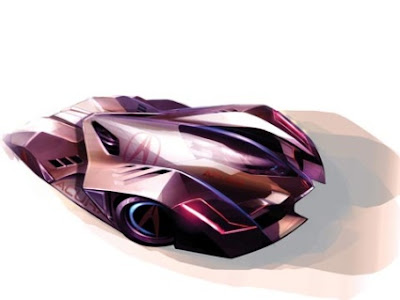
Diesel power is the hot ticket at Le Mans right now after the dominant win by Audi's R10 this year and Peugeot coming next year. But technology always moves on in racing (unless you're talking Nascar, but that's a whole other story). By the middle of the next decade, racers will likely have moved on to something else, and Acura is playing off of parent Honda's fuel cell efforts by showing drawings of a potential fuel cell powered Le Mans racer. It's unlikely a racer will look much like any of these drawings, but some of the technology could make it to the track. More drawings and a press release after the jump.

More excellent articles about LA Auto Show
+ Los Angeles Auto Show 2007 Preview: Quick test drive in BMW 535d
+ LA Auto Show 2007: Honda Civic GX quick test drive
+ LA Preview: Volkswagen to unveil plug-version of the Up! mini
+ Los Angeles Auto Show 2007 Preview: Quick test drive in BMW 535d
+ LA Auto Show 2007: Honda Civic GX quick test drive
+ LA Preview: Volkswagen to unveil plug-version of the Up! mini
Subscribe to:
Posts (Atom)

